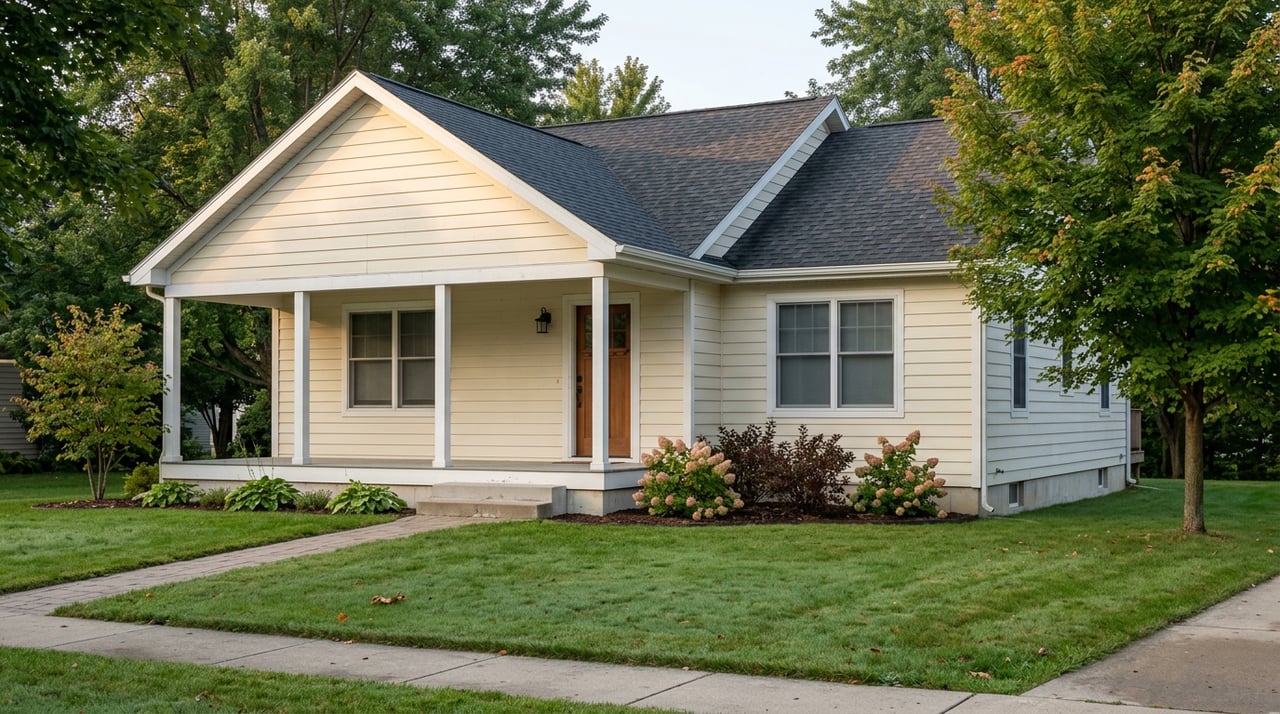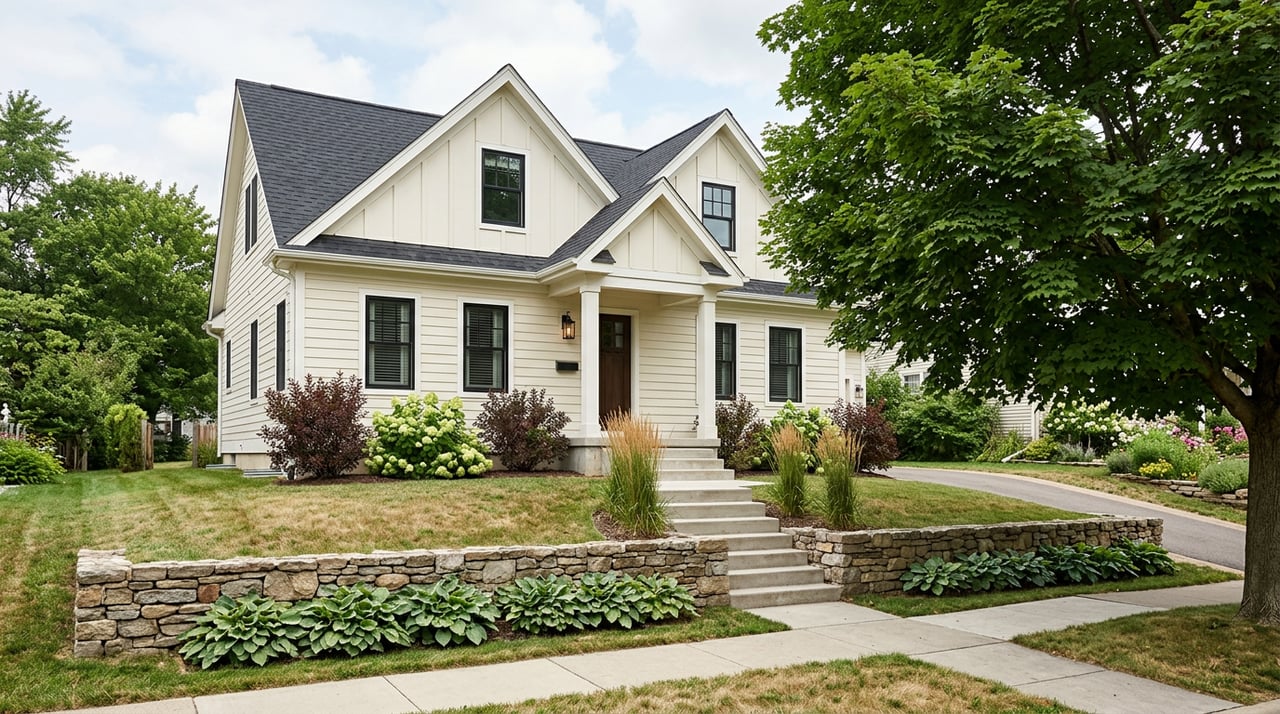
Two homes go under contract in La Crescent this month. One sits on a shelf cut into the bluff above town, windows angled toward the river valley, the kind of lot people move here to get. The other sits two blocks over on flat ground, unremarkable view, a noticeably lower price per square foot. Both buyers hire the same inspector. Both get handed the same kind of envelope during the contingency period: a radon test report. The number inside that envelope, not the view, ends up shaping how the next two weeks of negotiation go.
That's the part of buying in this corner of the Driftless Region that rarely shows up in a listing photo. The bluffs that make La Crescent worth a premium are limestone, carved by the same geology that puts Houston County squarely inside the EPA's Radon Zone 1, the agency's highest predicted-risk category for indoor radon. It's not a defect specific to any one house. It's a property of the ground the whole town sits on, bluff lot or valley lot. The difference is that buyers chasing the view often don't think to ask about it until the inspector already has.
Why the Bluffs and the Radon Come From the Same Rock
Radon forms when uranium in soil and bedrock breaks down. It's colorless, odorless, and enters a home through foundation cracks, sump baskets, and crawl space soil, then accumulates indoors if the house doesn't vent it. Minnesota as a whole carries a median indoor radon reading of about 4.4 pCi/L, already above the U.S. Environmental Protection Agency's 4.0 pCi/L action level, and the Minnesota Department of Health estimates two in five homes statewide test above that threshold. Houston County's Zone 1 designation means the predicted average indoor screening level here runs at or above that same 4.0 pCi/L line.
Local radon testing data specific to La Crescent has flagged the town by name for elevated readings, which lines up with what the geology would predict. The same bedrock that pushed up into bluffs over millions of years is the source material for the gas seeping into basements at the bottom of them. A buyer comparing a hillside lot to a valley-floor lot isn't choosing between a radon risk and no radon risk. They're choosing between two homes in the same zone, where the real variable is foundation type, not elevation.
What Minnesota Law Actually Requires, and What It Doesn't
Since January 1, 2014, Minnesota's Radon Awareness Act has required sellers to disclose, in writing and before a purchase agreement is signed, any knowledge they have of radon concentrations in the home. That disclosure has to cover whether a test has ever been run, what the results showed, and details of any mitigation system already installed. What the law does not require is that a seller test the home in the first place.
That distinction matters more in a town like La Crescent than it might elsewhere. A lot of bluffside homes have been owned by the same family for decades. Many were never tested, simply because nobody asked them to be. A blank disclosure form doesn't mean a clean home. It usually just means nobody has looked yet, which is exactly why the inspection period, not the listing sheet, is where this actually gets resolved. Sellers who knowingly skip a disclosure they're aware of can be held liable to the buyer for up to two years after closing, so the incentive to be upfront is written into the statute itself.
What the Test Actually Involves
A radon test done for a real estate transaction isn't the same as a five-minute check with a hardware store kit. Minnesota requires anyone testing a home they don't own to be licensed under the state's Radon Licensing Act, and the protocol is specific:
- The test runs a minimum of 48 hours under closed-house conditions, meaning windows and exterior doors stay shut except for normal entry and exit.
- Heating and cooling systems operate normally throughout the test rather than being turned off to save energy.
- The device sits in the lowest livable level of the home, typically the basement, whether finished or not, since that's where soil gas concentrates first.
- If the home has more than one foundation type, such as a basement plus a crawl space addition, each gets tested separately.
Because the test needs 48 hours minimum and closed-house conditions the day before that, it isn't something to schedule as an afterthought once other inspection items come back clean. Buyers who want leverage before the contingency deadline closes need this test ordered the same week as the general home inspection, not after.
What Mitigation Actually Costs, and Why That Number Is Negotiable
If a test comes back above the 4.0 pCi/L action level, the fix is a mitigation system, most commonly active sub-slab depressurization: a fan and pipe network that pulls soil gas from beneath the foundation and vents it above the roofline before it ever reaches living space. The Minnesota Department of Health puts the typical cost of a quality system at $1,500 to $3,000, with some regional contractors quoting a range closer to $800 to $2,500 depending on the home's foundation.
A few things move that number in either direction:
- Homes with a simple poured basement slab tend to land at the lower end.
- Crawl spaces need a sealed sub-membrane system, which adds material and labor cost.
- Any electrical work to power the fan requires a licensed electrician and a permit.
- A licensed installer tags the finished system with their name and license number, and a follow-up test at least 24 hours after the system starts running confirms it's actually working.
That range, $800 to $3,000 depending on foundation, is the number worth having in your head before you fall for a view. It's rarely large enough to walk away from a deal over, but it's exactly the kind of documented, statute-backed cost that turns into a seller credit or a price adjustment during negotiation, provided the buyer's side knows to raise it before the contingency period closes rather than after.
The Zone Doesn't Care Which Lot You Picked
The instinct is to treat radon as a bluffside problem and the valley-floor lot as the safer bet. The EPA's zone designation doesn't work that way. All of Houston County, and La Crescent along with it, carries the same Zone 1 rating regardless of elevation. What actually differs from house to house is foundation type and construction era, which is why two homes a few blocks apart can post very different test results even though they sit in the identical geological zone. The honest way to compare a bluff lot against a valley lot isn't to ask which one has radon risk. It's to ask what each foundation will cost to mitigate if the test comes back high, and to build that number into the offer the same way you'd build in a roof estimate or a furnace age.
A Few Questions Worth Settling Before You Write an Offer
Does a La Crescent seller have to test for radon before listing? No. Minnesota law only requires disclosure of what the seller already knows. A home with no prior test and a blank disclosure form is common here and isn't itself a red flag, it just means the buyer's inspection period is where the real answer shows up.
Is this really only a concern for homes on the bluff? No. The Zone 1 designation covers all of Houston County. A flat lot in town carries the same underlying risk profile as a hillside lot. What changes between properties is the foundation, which affects both the odds of an elevated reading and the cost to fix one.
Does an elevated reading usually kill a deal? Rarely. Given the documented cost range for mitigation and the fact that a working system can bring levels below 2 pCi/L, most buyers use the result to request a credit or a completed mitigation system rather than to walk away.
When should the test be ordered? As early as possible, ideally scheduled alongside the general home inspection. The 48-hour closed-house requirement means it can't be rushed at the last minute of a contingency period.
A bluff view is a genuine reason to love a house in La Crescent. It's just not the only number that determines what that house actually costs to own. Buyers who ask about the test, the zone, and the mitigation range before they write an offer are negotiating from the same facts a seller is legally required to disclose, which tends to make for a smoother close on either side of the table.
If you're weighing a bluffside lot against a valley-floor one in La Crescent, or anywhere else across the Driftless Region, Julie Delap can walk you through what a specific property's inspection history looks like and what to budget for before you write an offer. Schedule a consultation to talk through your next move, or browse the La Crescent neighborhood guide and the buyer's guide for more on what to expect during a Driftless Region purchase.